

Certain parts of this portfolio are blurred or edited due to NDAs with previous clients, to protect sensitive information and proprietary designs. If you’d like more details, feel free to reach out!
Modernizing the pickup scheduling process for parcel and freight
FedEx, a leader in the logistics industry, is renowned for its massive network and wide range of transportation services.
When FedEx approached me to phase out a legacy application used for scheduling worldwide pickups, it seemed like a straightforward task. However, this project quickly evolved into an opportunity to create a North Star vision to innovate and simplify the entire scheduling process.
Retiring a legacy application
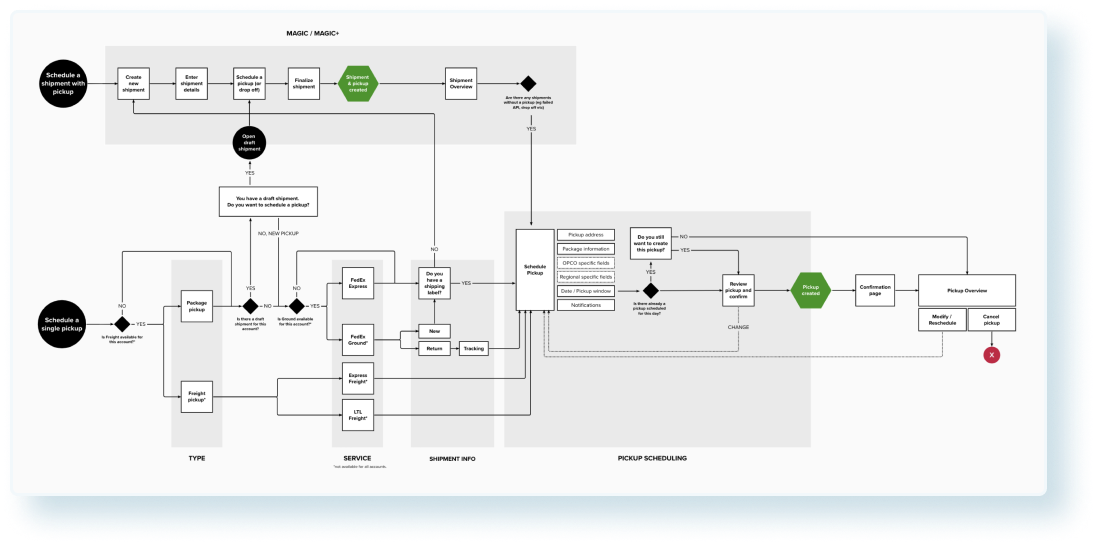
FedEx’s outdated tool for scheduling on-demand pickups needed an upgrade. The goal was to integrate the pickup feature into their modern shipping app, where customers already managed shipments. I collaborated with product and engineering to map out platform differences and ensure feature parity. I also conducted market and competitive analyses to align with industry standards.
Concept testing
With these insights, I crafted a customer journey and user flow to determine the best way to integrate the new scheduling experience into the app. I developed a low-fidelity prototype to visualize how this form could be incorporated. Alongside the user researcher on my team, we conducted concept testing and interviewed ten shippers to gather feedback on the initial design.
Identifying key issues
From user interviews and discussions with logistics stakeholders, I pinpointed two major issues with the current application:
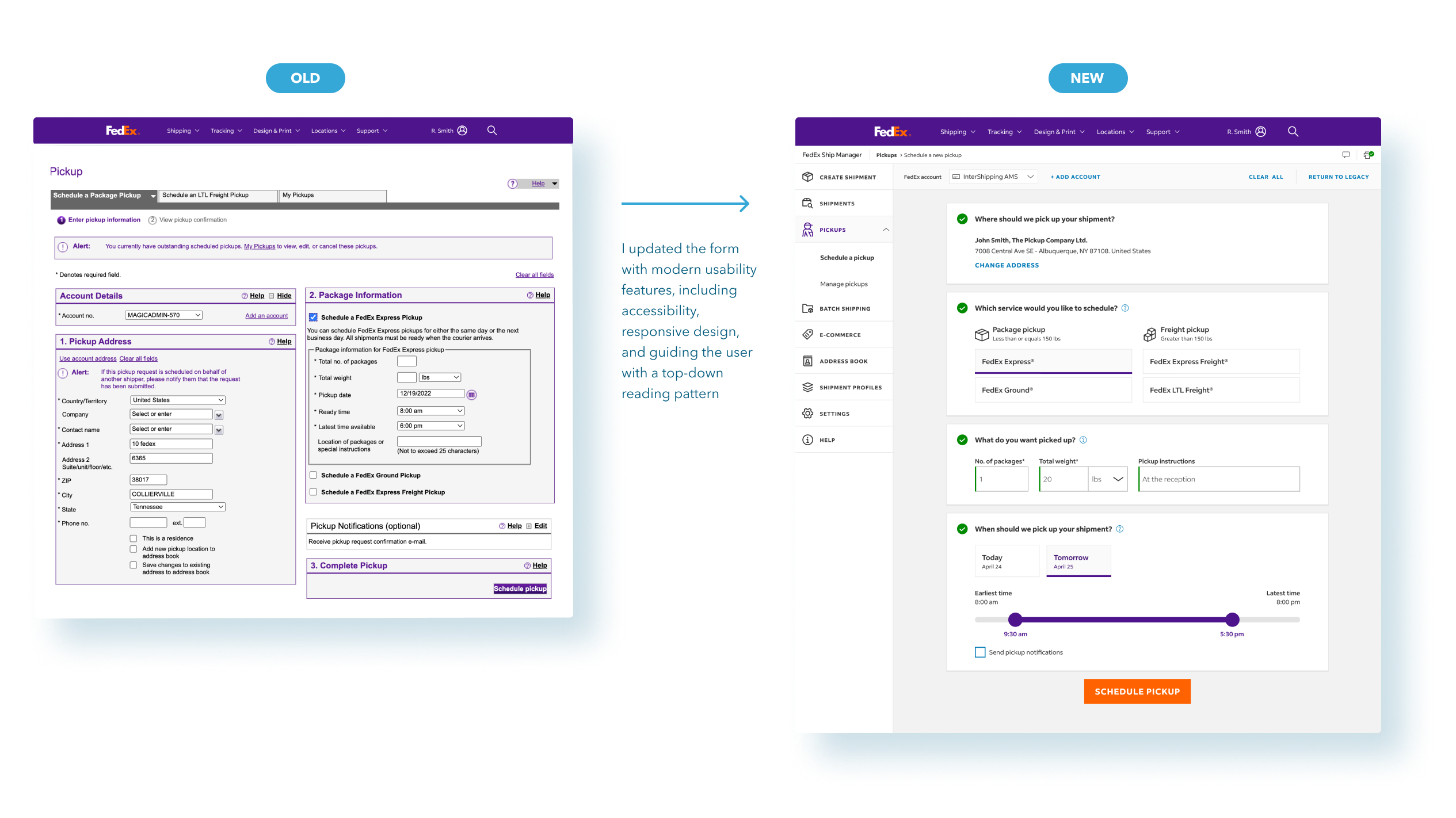
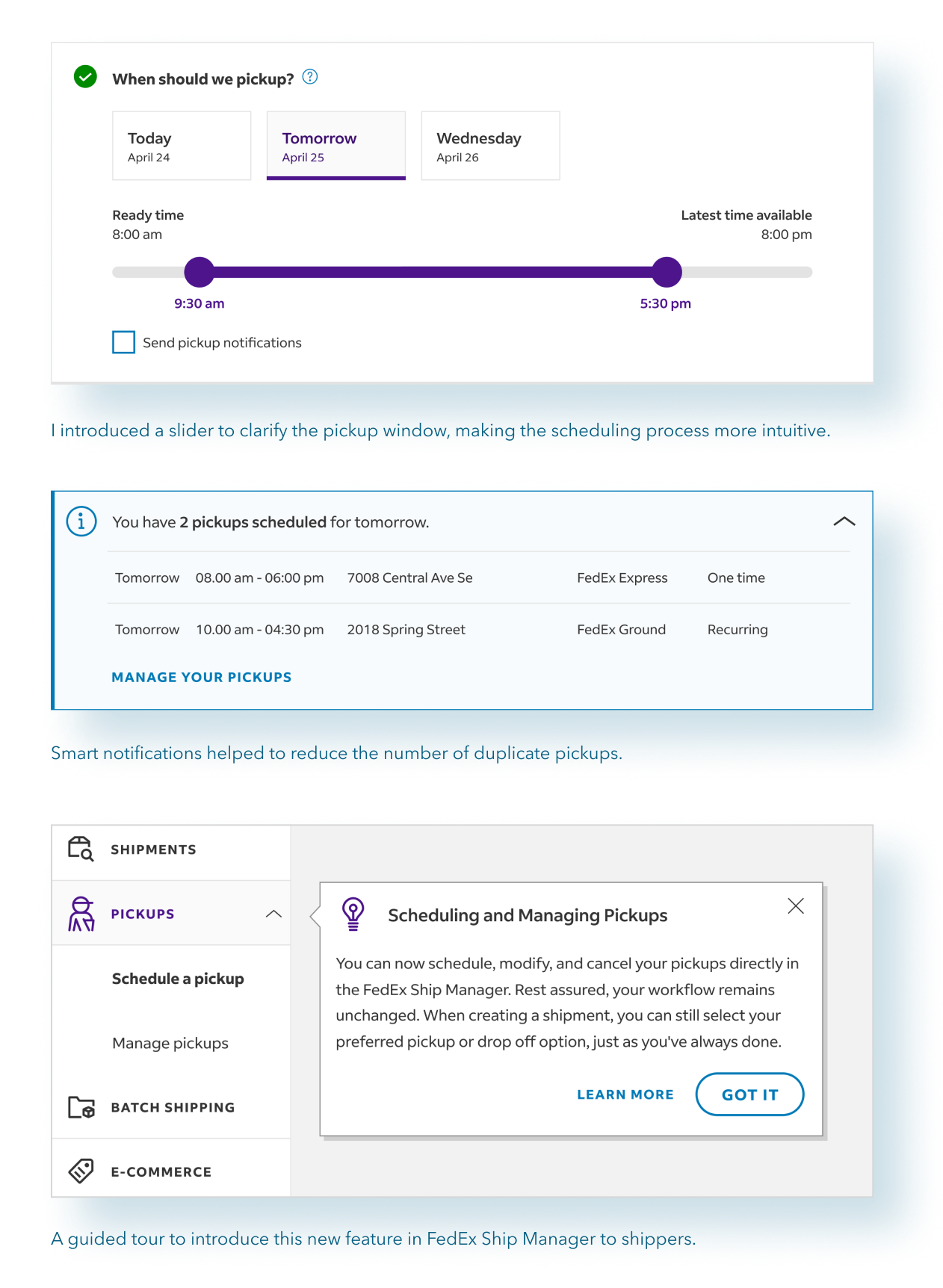
- Duplicate pickups: Usability issues and a lack of clear visibility of already scheduled pickups caused unnecessary driver trips.
- Confusion around pickup windows: Users could select a ready and latest time, but it wasn’t clear how these fit with FedEx’s standard windows, leading to support inquiries and missed pickups.
Crafting solutions
We updated the form with modern usability features, including accessibility, responsive design, and a top-down reading pattern. The new design included checks to prevent duplicate pickups and a slider to clarify FedEx’s pickup windows, making the scheduling process more intuitive.
From testing to successfull rollout
We ran another round of user testing to see how the form’s usability held up. Feedback was really positive, with participants navigating the prototype easily. After a few tweaks to the copy and adding some contextual support, we wrapped up the design.
Working with the product owner and engineers, we figured out the next step for an MVP. After launch, I teamed up with product marketing to roll out into new markets while the dev team kept refining the final version. We kept a close eye on operations and data to make sure everything ran smoothly.
Looking ahead
After the successful launch, I was asked to continue on the project to further innovate the pickup experience. As we hit feature parity with the old app and started phasing it out, we began exploring new opportunities driven by insights from our interviews and and technological advancements in logistics.
Exploring new opportunities
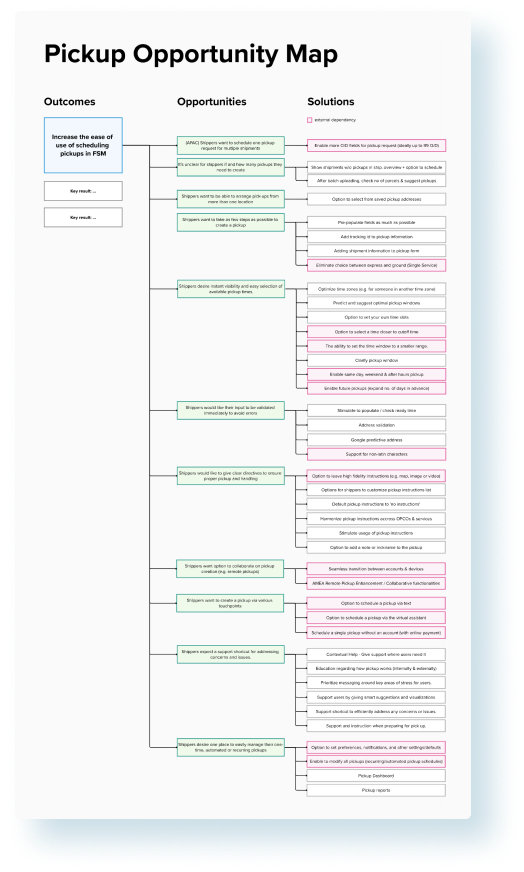
Our research uncovered several ways to improve the pickup experience, including better communication between drivers and shippers, more accurate pickup times, and digital scheduling for other segments like freight. I organized several creative workshops that led to an opportunity solution tree, packed with potential experiments to pursue.
Prioritizing features that users really want
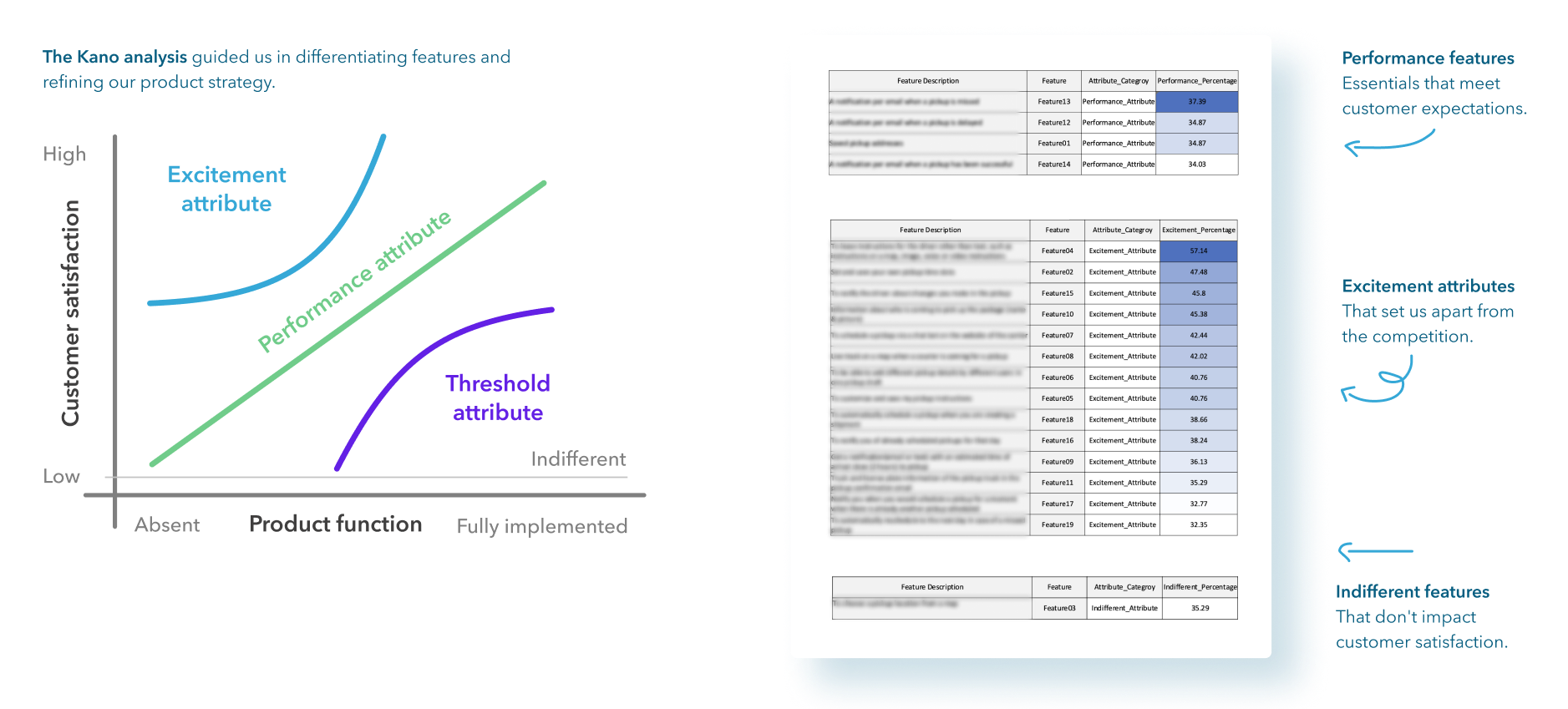
With so many features to consider, we needed a clear starting point. Partnering with the user researcher on my team, we used Kano analysis to gauge customer reactions to different features. This helped us boost customer satisfaction by focusing on a few standout features instead of spreading ourselves too thin. The Kano model guided us in prioritizing the most valuable ideas for development.
Building the roadmap
Our research allowed us to categorize features into essentials (to meet expectations), excitement features (that set us apart), and indifferent ones (that don’t impact customer satisfaction). This work helped us define key future projects and build a strong backlog for development.
Setting the course with a user-centric vision
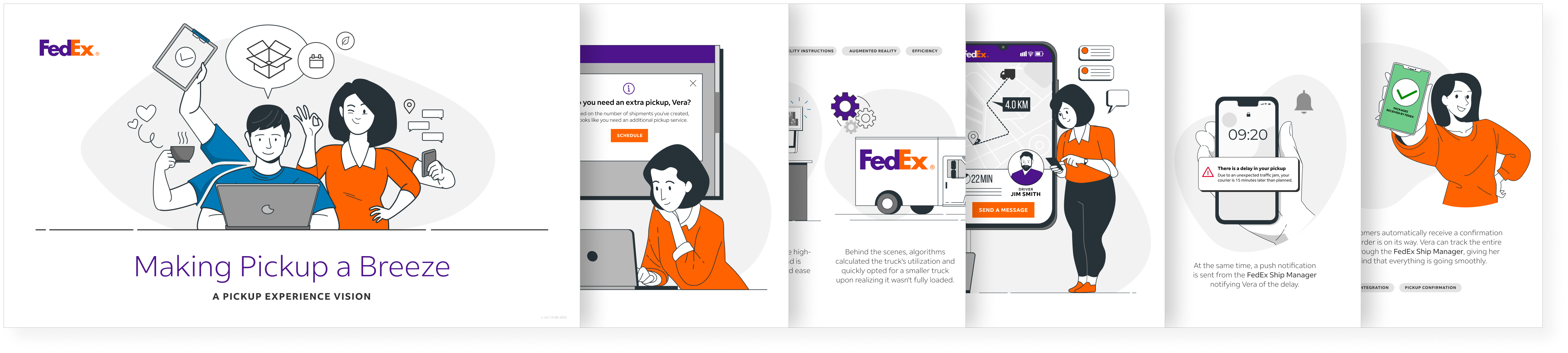
To bring all the stakeholders and teams together on the project, I created an experience vision grounded in our research. This visual story mapped out what the user’s future experience would look like, addressing pain points and sparking ideas across teams. It helped break down silos and connected departments, leading to better designs and smoother collaboration. It also served as our north star, steering the product roadmap and guiding our work ahead.
Impact
- Enhanced user experience with modernized application.
- Eliminated duplicate pickups, reducing inefficiencies.
- Successfully rolled out to all markets within months.
- Established a North Star vision to guide the product roadmap.
My role
- Led the redesign process, from user flows to final designs.
- Collaborated on research for exploration and validation.
- Organized workshops generating new ideas and experiments.
- Created an experience vision to align stakeholders.