

Certain parts of this portfolio are blurred or edited due to NDAs with previous clients, to protect sensitive information and proprietary designs. If you’d like more details, feel free to reach out!
Boosting conversion rates with a better user experience for travelers
Booking.com is a global leader in digital travel, linking millions of travelers with everything from cozy homes to luxurious hotels. I stepped in as a UX Designer and Team Lead to take on an exciting challenge: enhance the user experience for tablet users and boost hotel bookings.
Discovering key market trends and data gems
- Uncovering market insights: I kicked off the discovery phase by diving deep into market research, uncovering competitive insights, human interaction studies, and tablet usage data to better understand our audience.
- Mining internal gold: Next, I dove into internal data treasures, analyzing Google Analytics, surveys, diary studies, and dogfooding reports to pinpoint patterns and main user needs.
Sharing the learnings with the team
Bringing these findings to the team, I created a comprehensive research report that revealed travelers book fewer trips on tablets compared to other devices, but have a higher conversion rate than mobile. Notably, did you know that tablets rank among the top 10 personal items travelers take along?


Users overwhelmed by the amount of information
- Defining the problem: Our findings highlighted a major user pain point evident in both analytical data and qualitative feedback. Users were overwhelmed by the sheer amount of information on hotel pages, which hindered their decision-making and affected conversions.
- Our mission was clear: to simplify the user journey for touch device users, reduce cognitive overload, and help them easily find relevant information to make confident booking decisions.
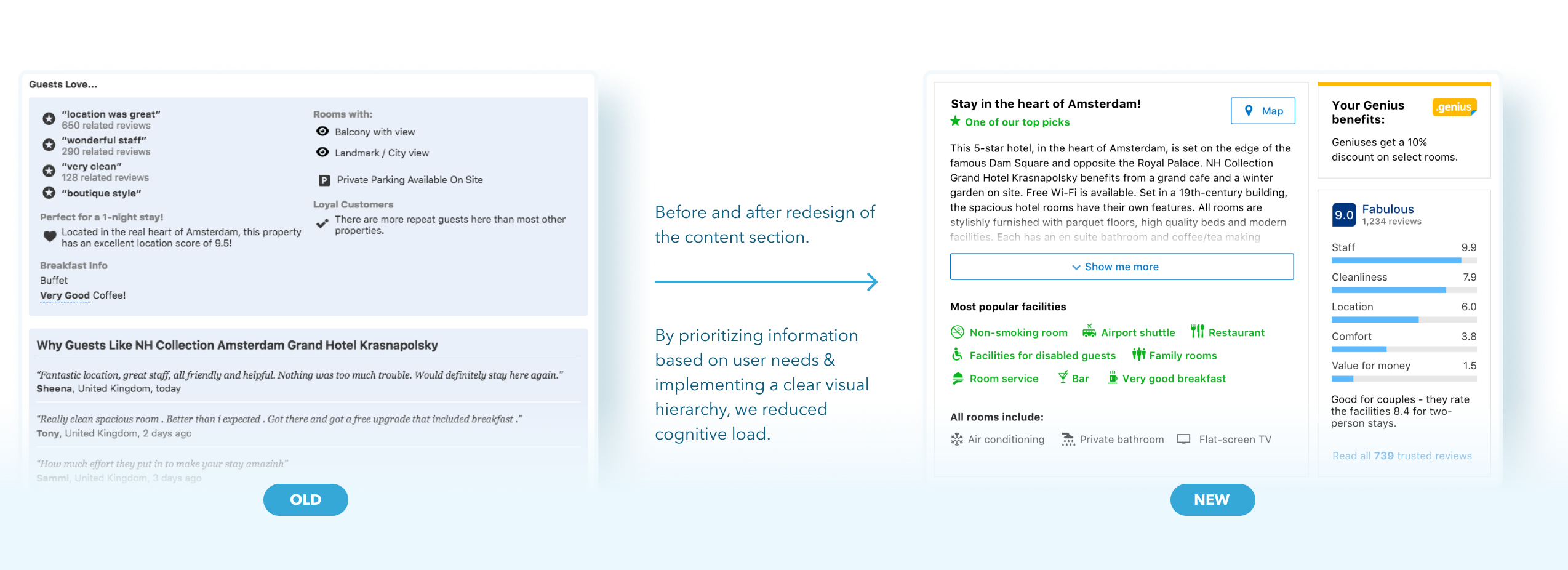
Revamping the hotel page to ease cognitive load
- Leading the ideation phase, I organized creative brainstorming sessions with the UX team to reimagine the hotel page experience. We tested accessibility, refined designs through multiple iterations, and drew inspiration from successful A/B tests on other platforms.
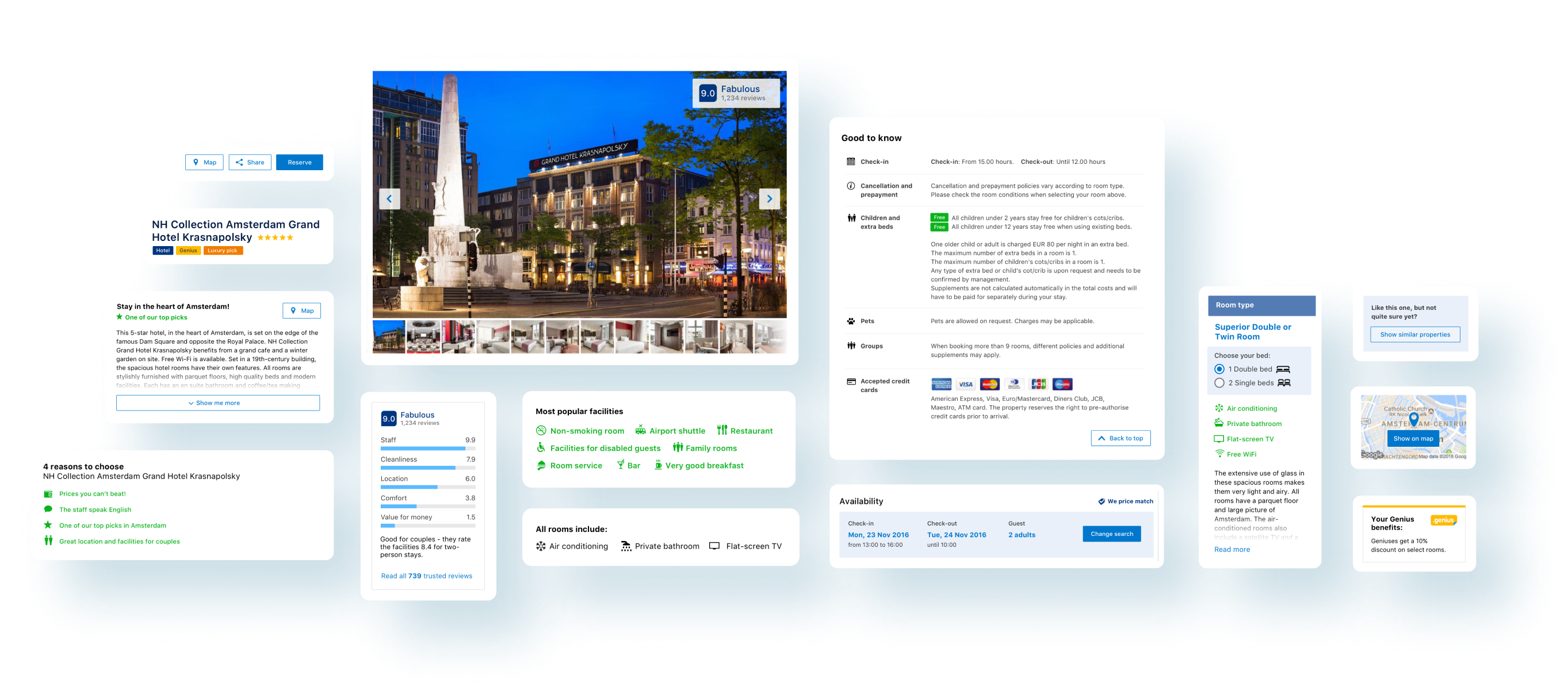
- Guided by user needs, I designed a clearer and more informative hotel page. The new layout highlighted accommodations, facilities, and room differences, making it easier for users to make informed decisions.
Fast learnings using a lean UX approach
Adopting a lean UX approach, I broke the final design into 15 user stories and coordinated closely with engineering and stakeholders for seamless execution. Within two months, we launched over 25 A/B tests to validate our hypotheses with real users.
Continuous experimentation, including blackout tests and customer service ticket monitoring, helped identify the most crucial information for users and refine our designs accordingly.
Boosting conversion rates with a better user experience
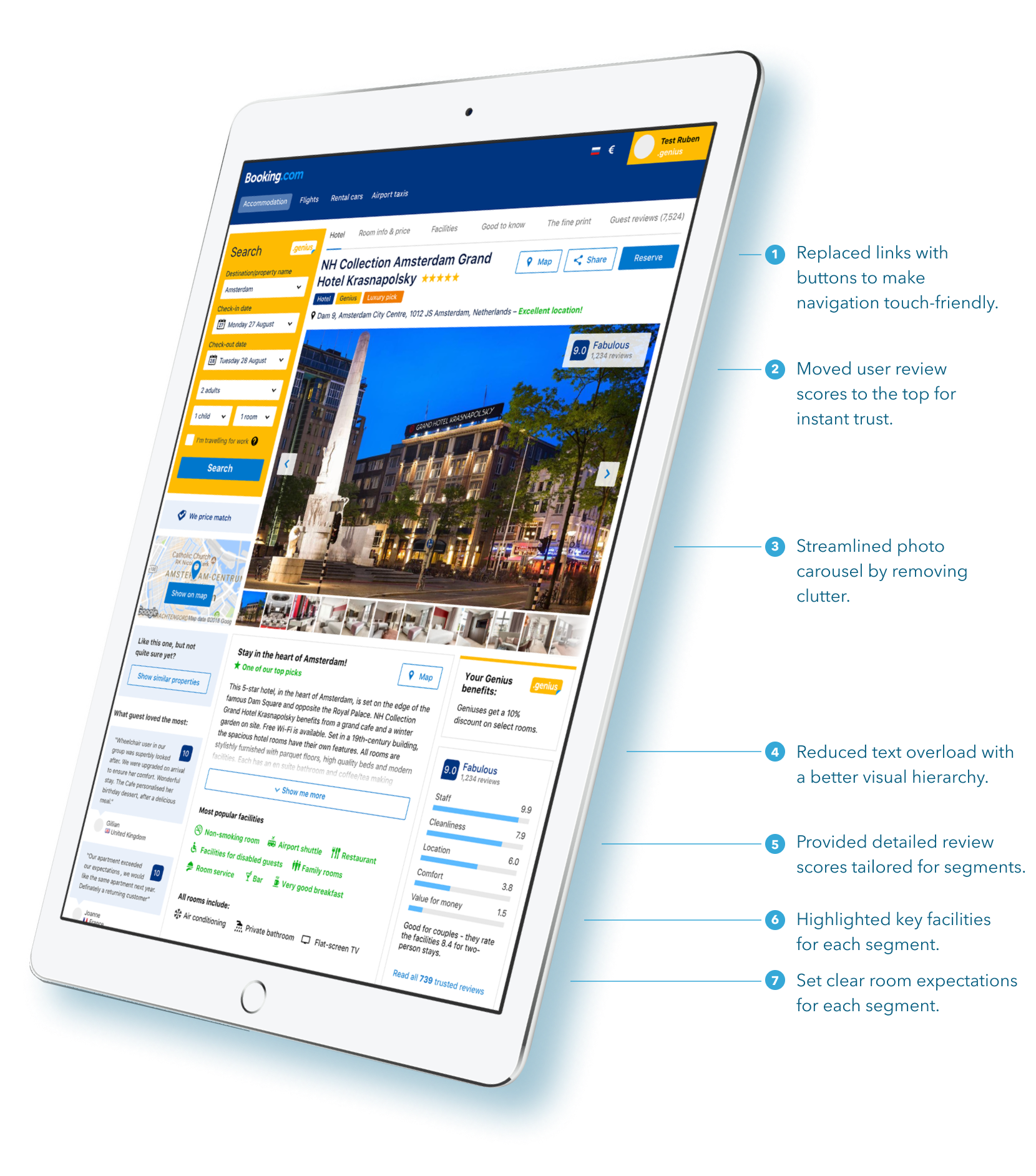
Our efforts led to 7 key improvements that significantly boosted conversion rates. Over half of our tests reduced customer service tickets, indicating a smoother user experience.
I’m proud that our user-focused, data-driven strategy enhanced the user experience and increased conversion rates, proving that thoughtful design makes a difference.
Impact
- Increased conversion rates for the hotel page
- Lowered the number of customer service requests
- Motivated the team to prioritize user-centric stories
- Proved that user-focused strategies drive results
My role
- Spearheading iterative, data-driven design
- Crafting high-fidelity design & prototypes
- Triangulating data and research insights
- Leading ideation sessions and collaborative workshops